
martes, 5 de abril de 2016

viernes, 8 de enero de 2016
at, in, on (Prepositions of Place)
Prepositions of Place: at, in, on
In general, we use:- at for a POINT
- in for an ENCLOSED SPACE
- on for a SURFACE
| at POINT |
in ENCLOSED SPACE |
on SURFACE |
|---|---|---|
| at the corner | in the garden | on the wall |
| at the bus stop | in London | on the ceiling |
| at the door | in France | on the door |
| at the top of the page | in a box | on the cover |
| at the end of the road | in my pocket | on the floor |
| at the entrance | in my wallet | on the carpet |
| at the crossroads | in a building | on the menu |
| at the front desk | in a car | on a page |
- Jane is waiting for you at the bus stop.
- The shop is at the end of the street.
- My plane stopped at Dubai and Hanoi and arrived in Bangkok two hours late.
- When will you arrive at the office?
- Do you work in an office?
- I have a meeting in New York.
- Do you live in Japan?
- Jupiter is in the Solar System.
- The author's name is on the cover of the book.
- There are no prices on this menu.
- You are standing on my foot.
- There was a "no smoking" sign on the wall.
- I live on the 7th floor at 21 Oxford Street in London.
| at | in | on |
|---|---|---|
| at home | in a car | on a bus |
| at work | in a taxi | on a train |
| at school | in a helicopter | on a plane |
| at university | in a boat | on a ship |
| at college | in a lift (elevator) | on a bicycle, on a motorbike |
| at the top | in the newspaper | on a horse, on an elephant |
| at the bottom | in the sky | on the radio, on television |
| at the side | in a row | on the left, on the right |
| at reception | in Oxford Street | on the way |
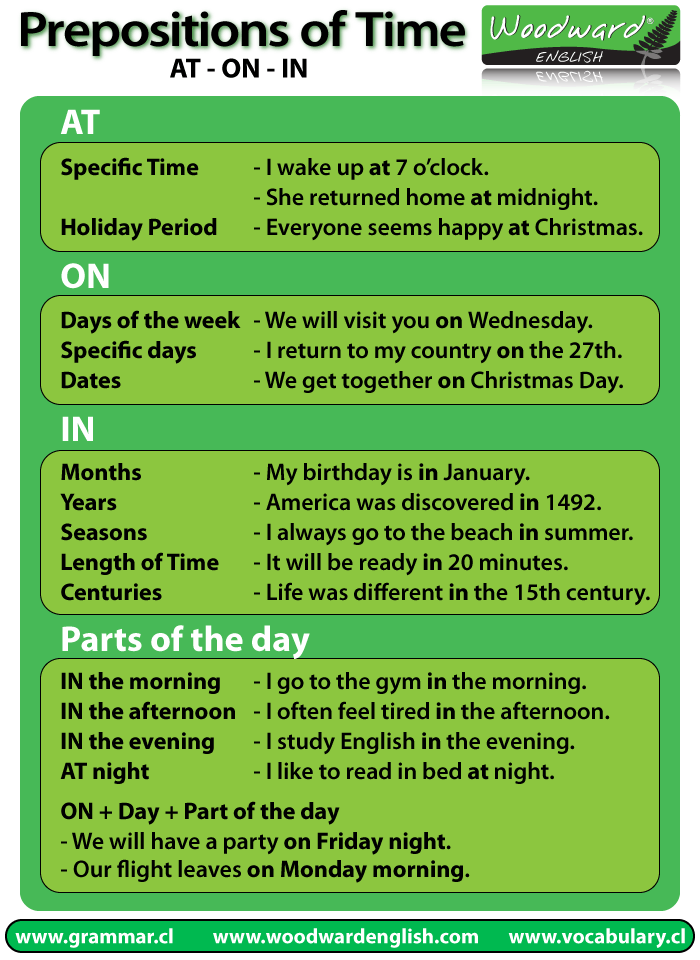
viernes, 18 de diciembre de 2015
sábado, 12 de diciembre de 2015
viernes, 11 de diciembre de 2015
martes, 24 de noviembre de 2015

viernes, 6 de noviembre de 2015
Present continuous structure


miércoles, 28 de octubre de 2015

martes, 27 de octubre de 2015


jueves, 15 de octubre de 2015


lunes, 12 de octubre de 2015
quiz presente vs presente continuo
Haz este cuestionario de 10 preguntas sobre presente simple y presente continuo. En el encabezado puedes ver una explicación de los usos de ambos tiempos verbales. Al acabar las 10 preguntas podrás ver tu puntuación. Good luck!
http://esl.about.com/library/beginner/bl_bgpresorcont.htm

http://esl.about.com/library/beginner/bl_bgpresorcont.htm
lunes, 5 de octubre de 2015
martes, 18 de noviembre de 2014
domingo, 7 de septiembre de 2014
miércoles, 8 de enero de 2014
The monster Why.
Once upon a time there was a monster called Why. Why was the only word that he could say. He always said Why when he was asked by someone.
(Video)
Nobody understood anything. It was so difficult understanding him , very difficult.Why had a friend called Pepe who Why liked to run with. Pepe was the only one that could understand Why, so Pepe was the one who was always translating him.
(Video)
They were very good friends, they went running together, livetogether and cook together. They were best friends since they were babies. One day they saw a dog running in a park and the monster asked to himself why he was always answering Why. Then Pepe said:
(Video)
-Try to say a word.
-Hell... hell... HELLO!
-You've got it.
Since that day the monster why knows to talk.
END
Adaptación del texto original
END
Adaptación del texto original
" El monstruo porque" por Óscar López
Suscribirse a:
Entradas (Atom)